ENVIRONMENT

We comply with standards in environmental impact management.

As TP-OTC, we have obtained the 'Environmental Management Unit Competency Certificate'

ENVIRONMENTAL IMPACT MANAGEMENT
  • //01
    ENVIRONMENTAL IMPACT MANAGEMENT
    tp-otc-cevresel-etki-yonetimi-card.jpg

    Within the scope of Environmental Law No. 2872, TP-OTC was granted the “Environmental Management Unit Competency Certificate” on May 31, 2024. In this context, we carry out all our activities under the following main categories:

    • Environmental and Social Impact Assessment (ESIA)

    • Environmental Impact Assessment (EIA)

    • Environmental Permitting and Licensing Processes

    • Environmental Management

    • Environmental Monitoring (Air Quality, Wastewater, Noise, Surface and Groundwater, etc.)

    • Dredging Projects

    • Carbon Management Initiatives

    • Energy Management Initiatives

    • Biodiversity Conservation and Monitoring Activities

    • Social Impact Assessment Studies

    • Training and Drills

    • Archaeological Studies

    • Waste Management (MARPOL 73/78 Waste and Hazardous & Non-Hazardous Waste)

    • Wastewater Management

    • Water Management

    • Contribution to the Circular Economy

  • //02
    WATER & WASTEWATER
    tp-otc-cevre-su-atık-su-card.jpg

    We design our potable water, domestic, and industrial treatment facilities located in our areas of operation in accordance with international standards and operate them in line with both national and international regulations.

    WASTE

    We ensure that hazardous, non-hazardous, and MARPOL 73/78 waste generated from our onshore and offshore operations is sent to licensed facilities in accordance with national regulations.

    Within our project area, we successfully continue our Zero Waste initiatives. We regularly record our waste data through the MOTAT system of the Republic of Türkiye Ministry of Environment, Urbanization and Climate Change.

    In addition, with our “TP-OTC Environmental Volunteers” team established within our company, we carried out the Filyos Coastal Cleanup Project and collected 280 kg of waste from nature. We will continue to plan and implement environmental projects with this team.

  • //03
    ENVIRONMENTAL MONITORING
    tp-otc-surdurulebilirlik-cevre-etki-yonetimi-card.jpg

    We continue our environmental monitoring activities every year, covering water, air quality, environmental noise, surface and groundwater, and emission measurements. Additionally, we conduct Land and Marine Monitoring studies twice a year.

    All studies and analysis results are compiled into reports with year-over-year comparisons. We track and aim to minimize our impact on the environment and ecosystem.

    Throughout all our processes, we remain transparent and accountable, ensuring compliance with both national and international regulations.

  • //04
    CONSERVATION OF BIOLOGICAL DIVERSITY AND SUSTAINABLE MANAGEMENT OF LIVING NATURAL RESOURCES
    tp-otc-cevre-biyolojik-cesitliligin-korunmasi-card-.jpg

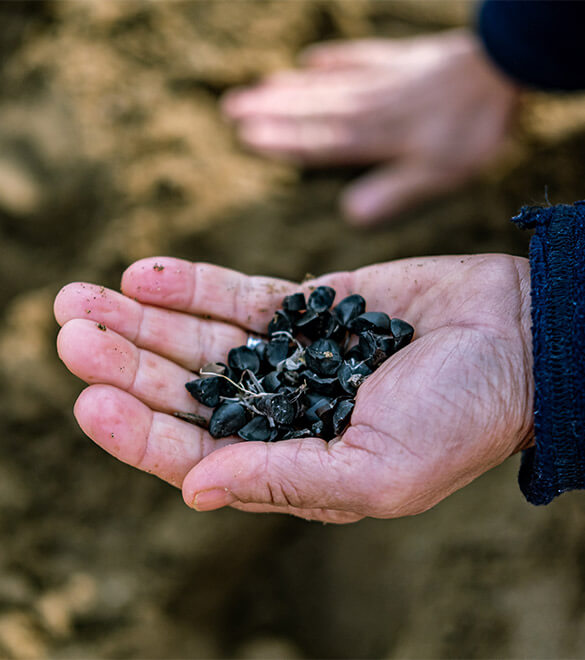
    In line with our commitment to the conservation of terrestrial biological diversity and the sustainable management of living natural resources, two protected plant species — the Sea Daffodil (Pancratium maritimum), which naturally grows in coastal dune habitats, and the regionally endemic Kilyos Knapweed (Centaurea kilaea Boiss) — were carefully collected from the Sakarya Gas Field’s coastal dune habitat.

    This process was carried out using the translocation method, in accordance with scientific principles, by the “Rare Plants Conservation and Research Group,” which includes expert academics, a qualified environmental specialist, and an ecologist.

    The plants were successfully relocated and replanted in a coastal dune area with similar habitat characteristics. Their adaptation and survival rate in the new environment has been 100%. In addition, part of the seeds collected from these species was delivered to the Gene Bank, while the remaining seeds were reused for replanting.

    These species are now under protection in their new locations, supported by ongoing monitoring and maintenance activities.

    In collaboration with our team of experts and academic professionals, we are committed to the conservation of marine biodiversity and the sustainable management of living natural resources throughout all phases of our project — including pre-construction, construction, and operational periods.

    We conduct and report on the following studies at appropriate intervals:

    • Oceanography

    • Bathymetry

    • Sediment Quality

    • Physical and Chemical Quality of Seawater

    • We carry out ecological monitoring, including phytoplankton, zooplankton, benthic species, invasive species, fish species, marine mammals, as well as habitat assessments, at appropriate intervals and report the results regularly.

    As part of our approach to minimizing the impact of our activities on the ecosystem and protecting local natural values through the conservation of biodiversity and the sustainable management of living natural resources, we follow international agreements and standards such as the IFC Performance Standard Equator Principles, the Bern Convention, the Convention on International Trade in Endangered Species of Wild Fauna and Flora, the Convention on Biological Diversity, and the International Union for Conservation of Nature.

    Additionally, within the scope of our project, we carry out landscaping and afforestation works to eliminate the effects of construction activities, ensure the sustainability of natural life and create living spaces for living things.
  • //05
    CARBON MANAGEMENT
    tp-otc-cevre-biyolojik-cesitliligin-korunmasi-card-.jpg

    In line with our goal of combating climate change and contributing to sustainable development, we consider carbon management an integral part of all our operations.

    We transparently monitor, report, and continuously improve our greenhouse gas emissions in accordance with the ISO 14064-1 standard and IFC Performance Standard I (Environmental and Social Risk Management) and IFC Performance Standard III (Resource Efficiency and Pollution Prevention).

    To determine our corporate carbon footprint, our emission sources are systematically identified, and our greenhouse gas inventory is prepared according to internationally accepted methodologies.

    In this context, our energy use, fuel consumption and emissions arising from our operational activities are calculated with methodological integrity.

    We monitor our emissions through our measurement and monitoring processes, and we work on practices aimed at energy efficiency and emission reduction in our operational processes.

    Through these efforts, we aim to minimize our environmental impact and contribute to the management of climate change risks.